


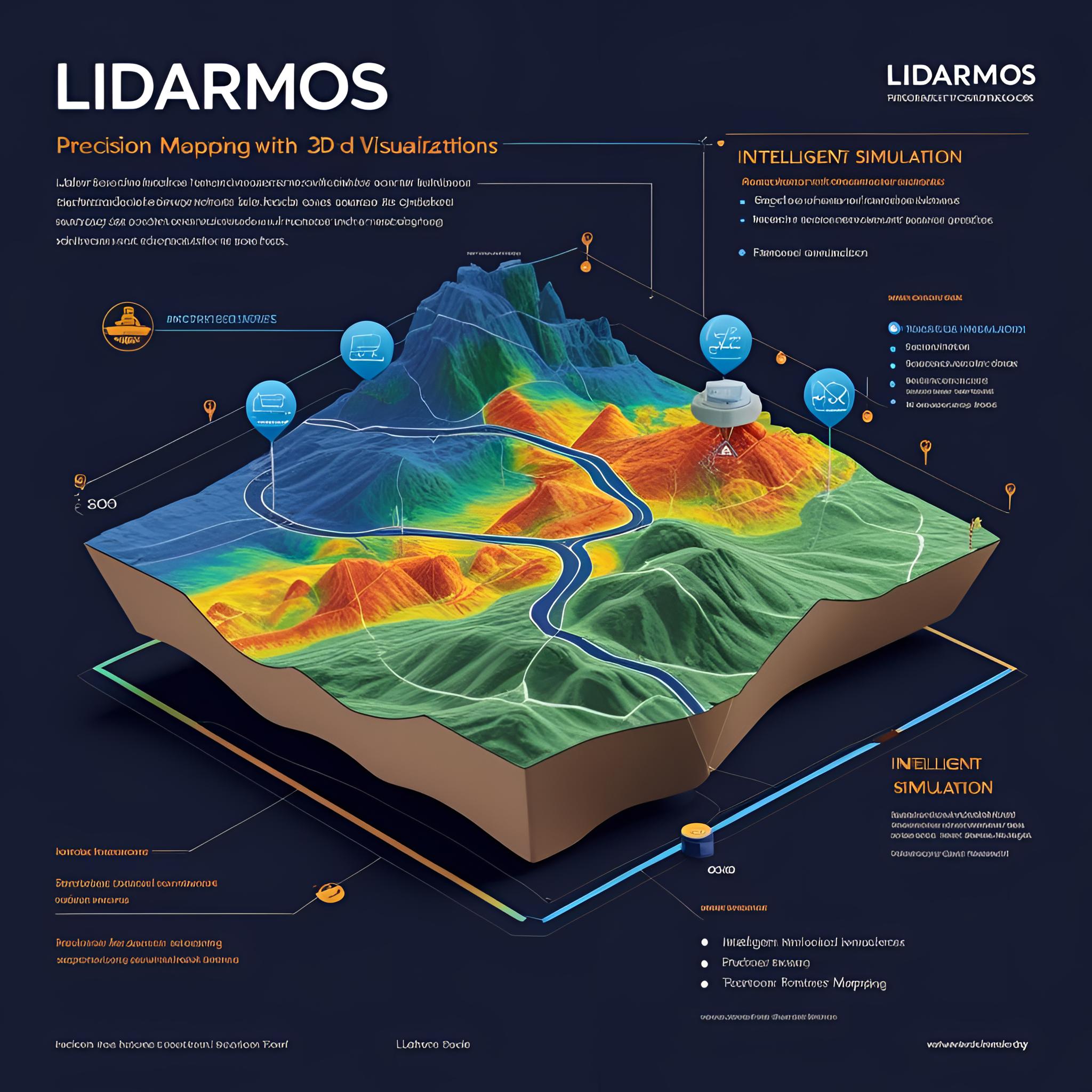
1. What Is LidarMOS and Its Core Purpose
LidarMOS (LiDAR Mapping & Operational Simulation) is a cutting-edge platform combining LiDAR sensor data with advanced simulation tools for industries like construction, urban planning, and autonomous vehicles. It integrates high-resolution 3D mapping with scenario simulations to support precise decision-making in complex environments.
The system’s main purpose is to streamline workflows by merging real-world terrain and object detection with predictive modeling. Organizations can visually inspect spaces, test design layouts, and optimize logistics long before any physical installation.
2. Key Features of LidarMOS
LidarMOS stands out with its seamless LiDAR scan processing. Raw point-cloud data is automatically cleaned, classified (e.g., buildings, vegetation, roads), and converted into accurate 3D models usable for CAD or BIM workflows.
Simulation modules let users rehearse vehicle paths, machinery operation, or pedestrian movement within that environment. Variable conditions—like lighting, weather, or equipment settings—can be tweaked to test performance under diverse circumstances.
3. Industry Applications
In urban planning, LidarMOS helps map entire neighborhoods and test green space layouts or traffic flows. City planners visualize how proposed structures interact with existing topography.
For excavation and construction, contractors use the platform to simulate earth-moving machinery trajectories and staging areas, preventing costly rework or conflicts between crews.
4. Benefits for Autonomous Systems
Developers of self-driving vehicles utilize LidarMOS to recreate real-world road networks as virtual test tracks. This enables safe testing of braking, lane changing, and obstacle avoidance in simulated yet realistic environments.
This drastically speeds up development cycles by reducing physical testing requirements and generating large-scale scenario data for machine-learning model training.
5. Workflow Integration and Data Compatibility
LidarMOS supports direct import of LiDAR files in industry-standard formats like LAZ or LAS. It connects with GIS systems such as ESRI ArcGIS and CAD tools like Autodesk Revit for seamless integration.
Users can export processed models as meshes, height maps, or 3D tiles, making results compatible with GIS, engineering suites, or VR/AR platforms, supporting cross-tool workflows.
6. Interactive 3D Simulation Environment
The platform features a robust simulation engine enabling dynamic vehicular, machinery, and pedestrian animations within mapped environments.
Users can set variables like time of day or weather and observe their impact in real time. This interactive view supports smarter decisions on lighting, signage, visibility, and planning.
7. Ease of Use and Customization
LidarMOS prioritizes simplicity with intuitive drag-and-drop interfaces for creating both maps and simulations. Detailed tutorials guide new users through scanning, editing, and exporting.
Advanced users can customize pipelines with scripting interfaces (Python or SDK access), adding new classification layers, simulation agents, or reporting modules.
8. Collaboration and Cloud Capabilities
LidarMOS offers cloud-hosted workspaces where teams share projects, mark findings, and iterate together. Change tracking ensures all users stay updated.
Robust permission settings control visibility and editing rights, enabling private or public review workflows depending on stakeholder involvement and security needs.
9. Data Security and Compliance
Built with enterprise-grade encryption for data in motion and at rest, LidarMOS ensures sensitive scans and project data remain secure.
The platform complies with international data regulations like GDPR. Users have full audit trails and can configure data retention policies to meet legal and corporate requirements.
10. Why LidarMOS Leads in Mapping and Simulation
LidarMOS stands out by merging accurate 3D scanning with real-time simulation—eliminating the gap between mapping and operational planning.
Its ease of use, rich customization options, and cloud-first collaboration model position it as a go-to tool for organizations tackling complex spatial challenges and infrastructure planning.
