


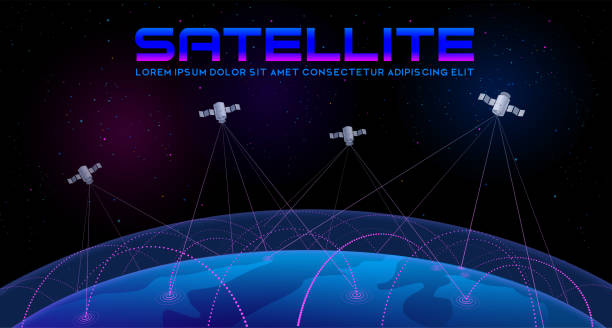
1. What Are Satellites? An Overview
Satellites are objects launched into orbit around Earth or other celestial bodies to perform a variety of functions. These can be natural, like moons, or artificial, which humans design and send into space to support communication, navigation, observation, and more.
Artificial satellites orbit Earth at various altitudes and speeds, depending on their purpose. Their roles range from providing GPS signals to broadcasting television or monitoring weather, making them essential tools in modern technology and science.
2. Different Types of Satellites and Their Uses
Satellites are categorized based on their mission, such as communication, weather, navigation, reconnaissance, and scientific satellites. Each type serves a unique role that contributes to global infrastructure and knowledge.
Communication satellites enable phone calls and internet access, weather satellites track storms and climate, and navigation satellites support GPS. Meanwhile, scientific satellites explore space phenomena, and military satellites enhance national security through surveillance.
3. How Satellites Are Launched into Space
To reach orbit, satellites are carried aboard rockets that propel them beyond Earth’s atmosphere. The launch process involves precise calculations to place satellites in the correct orbit, whether low Earth orbit (LEO), medium Earth orbit (MEO), or geostationary orbit (GEO).
After separation from the rocket, satellites deploy antennas and solar panels to begin their mission. Proper placement is crucial, as orbit type affects coverage area, signal strength, and operational lifespan.
4. Satellites and Global Communication Networks
Communication satellites relay signals that enable phone conversations, television broadcasts, and internet connectivity across continents. They are vital in bridging communication gaps, especially in remote or underdeveloped regions.
These satellites bounce signals between ground stations and receivers, overcoming physical barriers like mountains and oceans. Modern advancements have introduced low Earth orbit constellations, promising faster and more reliable global internet services.
5. Navigation Satellites and GPS Technology
Navigation satellites form the backbone of GPS and other global positioning systems. By sending precise timing signals to receivers on Earth, they allow users to determine exact locations anywhere on the planet.
Besides civilian navigation, GPS supports numerous applications including aviation, shipping, military operations, and emergency response, making satellite navigation indispensable to daily life and commerce.
6. Satellites in Weather Forecasting and Environmental Monitoring
Weather satellites monitor atmospheric conditions, tracking storms, rainfall, and temperature changes. This information supports accurate weather forecasting and helps mitigate the impacts of natural disasters.
Environmental satellites also measure pollution levels, deforestation, ice cover, and ocean health. Their data provide insights critical for climate science, resource management, and environmental protection worldwide.
7. Military and Surveillance Satellites
Military satellites play a strategic role by providing reconnaissance, secure communications, and missile warning capabilities. These satellites offer real-time intelligence and situational awareness crucial for defense.
Surveillance satellites collect imagery and signals intelligence, allowing governments to monitor activities globally. Their capabilities help maintain national security and support peacekeeping efforts.
8. Challenges of Satellite Traffic and Space Debris
The growing number of satellites raises concerns about overcrowding in orbit and the accumulation of space debris. Collisions and malfunctioning satellites create hazardous debris that threatens operational spacecraft.
International efforts focus on tracking debris, improving satellite design for end-of-life disposal, and developing regulations to sustain the space environment. Managing space traffic is essential to preserving satellite services for future generations.
9. Private Sector Innovations in Satellite Technology
In recent years, private companies have revolutionized satellite technology by launching large constellations for broadband internet and Earth observation. Companies like SpaceX and OneWeb aim to provide global connectivity and enhanced data services.
Private sector involvement has accelerated innovation, lowered launch costs, and expanded satellite applications beyond government projects, creating new markets and opportunities in space technology.
10. The Future of Satellite Technology
The future of satellites includes advancements in miniaturization, artificial intelligence, and inter-satellite communication. These technologies will improve efficiency, increase data collection, and enable autonomous operations.
Emerging trends also point toward mega-constellations that offer worldwide internet access, enhanced Earth monitoring, and deeper space exploration. As satellite technology evolves, it will continue to transform communication, navigation, science, and security.
